
About BFRB Con 2026
With generous funding from the Leo Foundation, we are delighted to invite you to BFRB Con 2026, which will provide invaluable opportunities for knowledge exchange, professional development, and community-building around a group of mental health disorders that remain under-studied and under-represented. Our goal is to foster collaboration across disciplines, inspire and develop new research initiatives, and provide a space where those living with, living alongside, or those who are curious about BFRBs, can feel valued and be part of the future of BFRB research and support.
Our programme will bring together clinicians, researchers, and people with lived experience to advance dialogue across disciplines. Lived experience will be central throughout the event, and community members are welcome across all three days.
Hosted and led by: University of Oxford
Funded by: LEO Foundation
Scientific programme: Scientific Programme Committee (see below)
Community programme: developed by a coalition of BFRB community contributors (info coming soon)
Supported by commercial sponsors and non-profit organisation: see sponsorship page
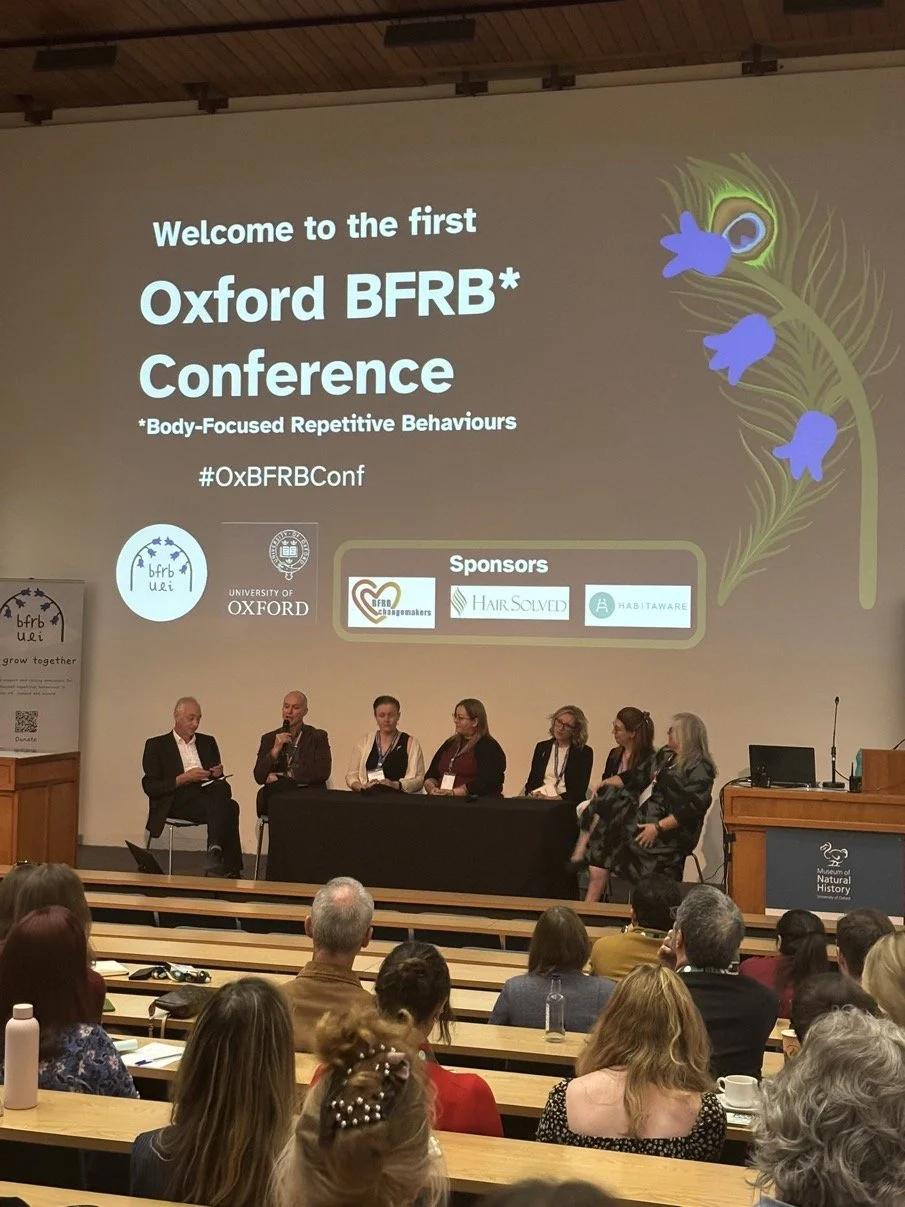
‘Lived experience scientist’ panel from 2024 conference
What are BFRBs?
Body-Focused Repetitive Behaviours (BFRBs) are a group of complex mental health disorders that are characterised by the uncontrollable urge to pull, pick, scratch, cut, or bite one’s own skin, hair, or nails. These behaviours are not simply “bad habits”; they are often chronic, difficult to control, and associated with high levels of emotional distress. They can have profound impact on everyday life, including work, education, relationships, and general social functioning.
BFRBs also have significant dermatological, trichological, and physical consequences. Repetitive picking, pulling, scratching, and biting can lead to skin lesions, excoriations, bleeding, scarring, pigment changes, and secondary infection, as well as hair thinning, hair loss, and, in some cases, more persistent alopecia. Because shame and stigma are so common, many people conceal their behaviours, meaning clinicians may first encounter the physical signs before the underlying condition is disclosed.
Despite affecting an estimated 4 million people in the UK and Ireland alone, BFRBs remain widely misunderstood and heavily stigmatised. As a result, many people live in secrecy and shame, and only a small minority ever seek support from a healthcare or therapeutic provider. For many individuals, dermatology and hair clinics are the first point of healthcare contact, placing skin and hair specialists in a key position to recognise BFRBs early, reduce shame, and prevent progression of tissue and hair damage.
Although BFRBs are often viewed purely as psychological conditions, emerging research points to more complex interactions between the brain, skin, and immune system, with potential implications for the experience of urges to pick, pull, and bite. Understanding this skin–brain relationship - and what it means for assessment, treatment, and interdisciplinary care - will be a central theme of this year’s conference.
Who are we?
Leadership
Clare Mackay (grantholder, PI)
Laura Lee (admin support)
Louisa Kotzee (admin support)
Scientific programme committee:
Clare Mackay, Univ of Oxford
Polly Waite, Univ of Oxford
Claire Higgins, Imperial College London
Francis McGlone, Manchester Metro University
Tess McPherson, University of Oxford
Gill Westgate, Hair & Skin Science consultant
Community coalition
more info soon!!
We gratefully acknowledge the significant contributions that BFRB UK & Ireland volunteers made to BFRB Con 2026 before their decision to withdraw (see below).
Update, September 2026
BFRB UK & Ireland has decided to withdraw as community partner from BFRB Con 2026 following a disagreement about the involvement of a sponsor. The University and BFRB UK & Ireland were unable to agree a common position on the sponsor’s continued participation. Both organisations regret the disruption this will cause to the BFRB community. The combined scientific and community programme will continue, and the conference organisers are working to minimise the impact on attendees and contributors.